



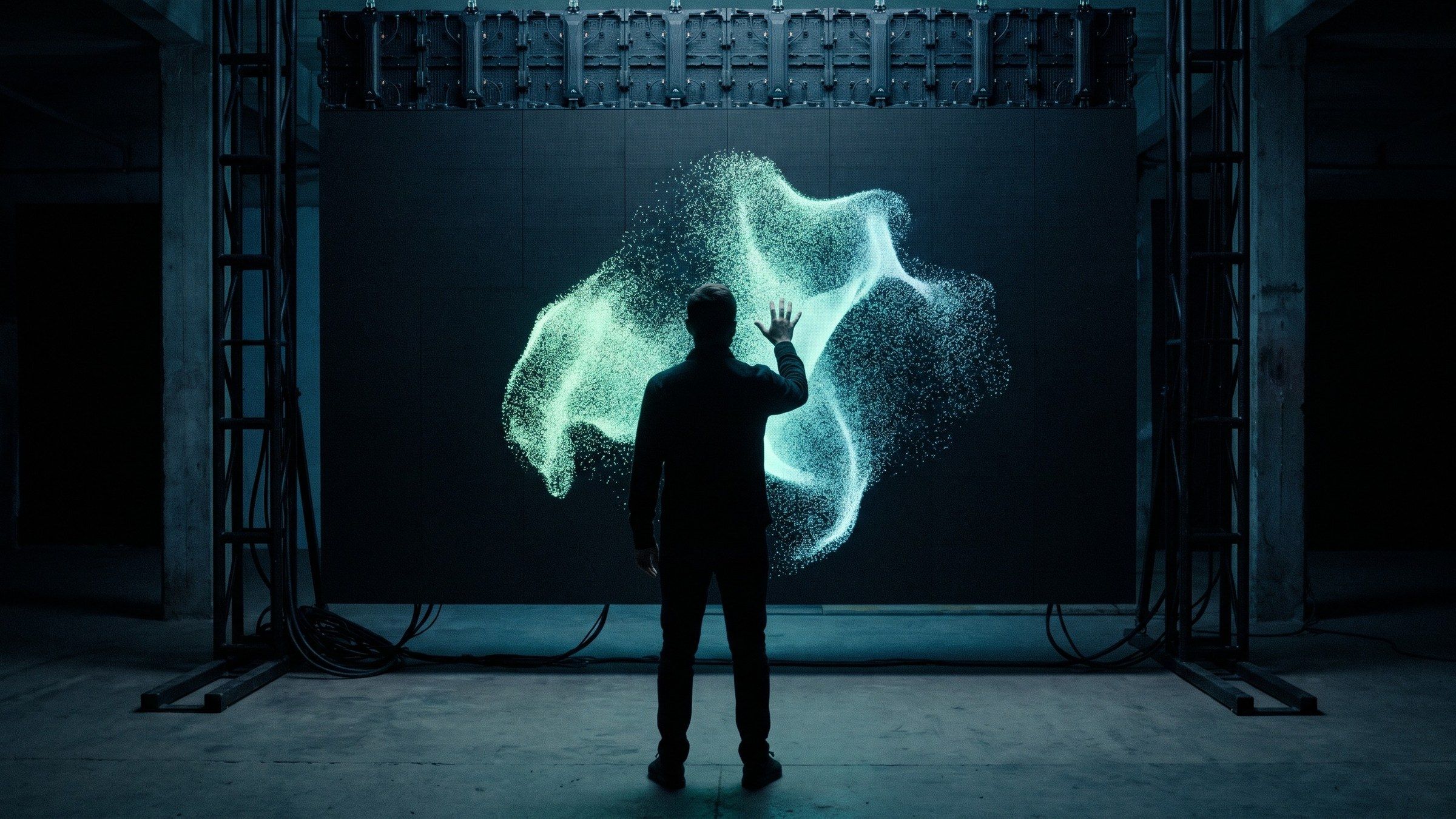
AI Photo Booths for Brand Activations: A Practical Planning Guide
Plan AI photo booths for brand activations with clear creative choices, realistic queue assumptions, output review, data handling, and delivery testing.
AI photo booths for brand activations use generative image tools to create or transform a participant’s image within a campaign concept. A complete experience includes the invitation, image capture, generation, review, delivery, and reset. Creative quality matters, alongside waiting time, output suitability, and clear data handling.
A strong concept gives people a reason to participate beyond seeing an unfamiliar visual treatment. The result might connect them to a campaign world or let them choose a branded creative direction. The brand should remain recognisable without making the image feel like an advertisement placed over an unrelated portrait.
Separate the creative promise from the workflow
Describe the participant journey before selecting a model or provider. Will a camera capture the image? Can visitors upload their own? How many creative options are available? Who sees the result before it appears on a public display?
Then define what the experience promises. A stylised portrait is different from a faithful product visualisation. A speculative image should not imply that a real person performed an activity or endorsed a product when they did not.
For a hypothetical travel campaign, visitors might choose among several illustrated destination themes. The creative concept could remain clear even if the generation style is deliberately non-photorealistic. This example is a possible approach, not evidence of an XSEDES campaign.
Test a range of representative inputs
Review varied lighting, poses, clothing, accessories, group sizes if supported, and the participant characteristics relevant to the audience. Check whether the selected treatment produces acceptable results consistently enough for the intended use.
Agree on review criteria before the event. Consider recognisability where required, unwanted distortions, inappropriate imagery, missing brand elements, and the handling of rejected outputs. Record which problems require a retry and which should route to an alternative result.
NIST’s Generative AI Profile provides a framework for identifying and managing risks associated with generative AI. For an activation, use a specific evaluation plan rather than assuming a provider’s general demonstration proves suitability for your audience.
Model the entire queue
Generation time is only one part of a session. Include the introduction, choices, capture, waiting, review, delivery, and any cleaning or reset. Some activities can happen in parallel; others depend on shared equipment or staff attention.
| Stage | Question to resolve | Possible bottleneck |
|---|---|---|
| Invitation | Can visitors understand the concept before joining? | Repeated explanations |
| Capture | Is framing and lighting straightforward? | Retakes and assistance |
| Generation | What happens under the expected load? | Service delays or failed requests |
| Review | Who accepts, rejects, or retries the result? | Unclear approval responsibility |
| Delivery | How does the right person receive the right output? | Network or identifier errors |
Run a timed rehearsal using the intended setup and a realistic sequence of participants. Report the observed conditions with the result. A best-case demonstration should not become an unqualified promise about live capacity.
Make participation and data handling understandable
Explain what image is collected, which service processes it, where the output goes, and what retention arrangements apply. Separate participation from any optional marketing follow-up. The responsible team should confirm permissions, supplier terms, and market-specific obligations before launch.
W3C’s Privacy Principles describe minimising unnecessary personal data. In practical planning, avoid collecting extra identifiers simply because a form makes them easy to request.
Children, public galleries, and cross-border processing can require additional decisions. Identify those conditions early and assign them to the appropriate responsible reviewer. A creative approval does not resolve the data workflow.
Design a useful fallback
If generation fails, the visitor still needs a clear response. Options might include a pre-approved non-generative treatment, a retake, or an honest explanation that the activity is temporarily unavailable.
Agree on whether results can be generated later and how they would be delivered. Do not offer that option unless the team has defined the matching, retention, and support process. Test that a participant cannot accidentally retrieve another person’s output.
Make the brand fit the image
Prepare visual examples for each creative route, including where the logo or campaign line appears. Use approved artwork and establish which elements must remain outside the generative process. Brand-critical text is often better handled through a controlled composition step than left to unpredictable image generation.
The output also needs an intended format. A portrait for a personal download and a landscape image for a venue display need different compositions and permissions. Define these uses before the experience is built.
Frequently asked questions
Does an AI photo booth need cloud connectivity?
Some workflows use cloud services; others may use local processing. Confirm the selected architecture, hardware requirements, latency, and permitted fallback with the supplier.
Can every output be shown automatically on a public screen?
That should be an explicit campaign decision, including participant permission and output review. Automatic public display can introduce problems that a private preview avoids.
What should an agency ask a supplier to demonstrate?
Request the complete capture-to-delivery workflow, representative output testing, load behaviour, retry handling, retention arrangements, and the approved fallback.
Plan the complete photo experience
Share your campaign concept with XSEDES, including the intended audience, creative route, event market, and output use. To see how XSEDES runs one, read about the X-CAPTURE AI Portrait Booth, deployed at TEDxKMCT 2026, read what 520 AI portraits taught us at that event, or browse the X-CAPTURE range. Compare it with other brand activation technologies and capture the dependencies in an event technology brief.
More on brand experiences.
-
Brand Activation Technology: How to Choose the Right Experience
-
Interactive Exhibition Technology: Design for Better Conversations
-
What 520 AI portraits taught us about running a booth at a campus event.